


 |
 |
|
Heron of Alexandria, Pneumatics (1st century B.C.)
| Source page | Hero | Cicero | Lucretius | Pliny the Elder | Ptolemy | Galen | Capella | Basil and Philoponos | Augustine | Boethius | Isidore of Seville | Benedict |

Source |
Hero, Pneumatics |
Translation |
Bennett Woodcroft (London, 1851). |
Web
Source |
Steam Engine Library, University of Rochester (NY) |
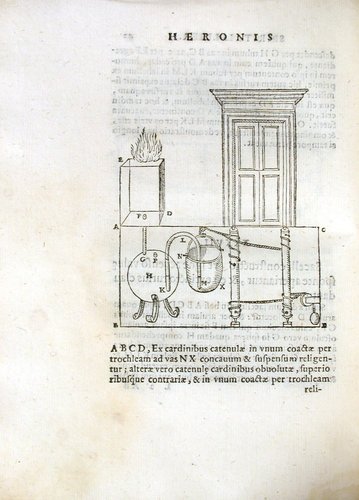
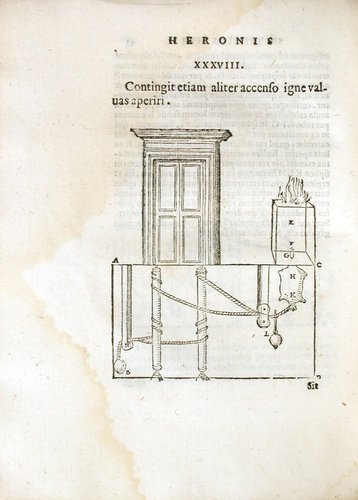
Hero (or Heron) of Alexandria (1st century BC), fashioned all sorts of marvellous automata or "miraculous" devices using steam, air pressure, hydraulics, and falling weights. For example, once an altar would be lighted, the temple doors would open automatically (see below).
For our purposes, Hero can represent Roman accomplishments in technology. There are two rather odd characteristics to note about Roman technology. First, the Romans more often applied scientific knowledge to produce wonders than to invent labor saving devices (for instance, widespread use of windmills and water wheels had to wait for the middle ages). And second, much Roman technology, ranging from the invention of concrete for paving Roman roads to the engineering of the aqueducts, was accomplished more through practical, trial and error know-how than through applying scientific principles (as we think of technology today). Yet the notable exception is Hero's "marvels," which do seem to reflect applications of physics and geometry. Enjoy the following brief glimpses of Hero's interesting work.

Do you have a great quote for this page? Let me know! (If used, a new quote is worth 1 point extra credit)

|
HSCI 3013. History
of Science to 17th century |
spellcheck.net | wordcounter.net
Many thanks to the pedagogical model developed in Mythology and Folklore and other online courses by Laura Gibbs, which have been an inspiration for this course.
|
|
This course is currently undergoing major reconstruction to bring it into alignment with the new version of the course at Janux |
|||


